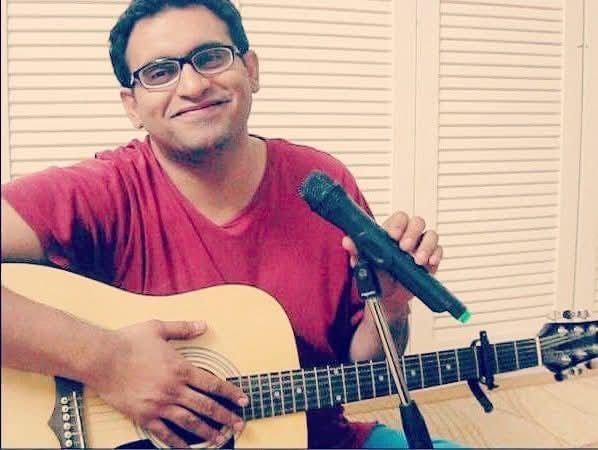
mid-song
midmorning music at the beach


I’m at the beach this weekend, feeling lighter than I have in weeks.
Then, there was a moment today:
Midmorning, we’re sitting at the dining table, we’ve just come home from getting coffee and bagels. The speaker is connected, and the playlist is a mix of latin dance, Pakistani indie and K-Pop Demon Hunters. Amelia and Taimur are dancing, there is laughter and sunlight has warmed the wooden floor. Our feet are happy.
Babylone’s Zina comes on. I’ve heard it plenty of times, but today, my first thought is of Bhai. It’s a song he would’ve known but not this version of it, and as I’m sipping my coffee and Amelia’s small body is swaying next to mine, nudging my shoulder at the beat, I see his face, clearer than ever, in my mind’s eye. The song, the gentle guitar, the Afro-Arab vibe, is so him. Just like Cheb Khaled’s Aicha, one of his all-time favorites to sing acoustic. And suddenly I’m hearing no longer hearing Zina on the speaker in Mohammed Amine Djemal’s voice, but what it would’ve sounded like in Bhai’s voice.
This moment, where the music is dominating everything else, how we eat, how we sit, how we’re gathered together, shatters me. And suddenly, I’m not here at the beach anymore. I’m in my grief, and nothing else.
It seems silly to have full-on sad days now, nearly 16 years now after his death. All of that, I’ve convinced myself, is for the early years, the first few.
After year five, something settles.
After year ten, the memories are harder to hold on to, harder to recall face, voice, gesture.
And around year fifteen, I become an expert at not feeling anything at all, at choosing to push away the fact of his death because there were facts of his life that are now harder to bear. I’ve advanced through all these stages in the aftermath, so when the grief comes now, it’s a sinkhole.
I can’t see it coming until I’m fully in it, rapidly descending.
In the last two weeks, I’ve had two different encounters about dead family members.
One with a dear writer, who lost a parent this time last year. We spoke quietly about the weirdness of celebrations, how they’re forever tainted. Is this how every good thing, every big occasion will be like now? I recall saying, there will always be two of you, one who holds joy, and one who can’t.
Another exchange happened at work, brief, just a few messages over Teams, well after work hours. Also, a parental loss. She admitted, I’m not working as quickly as I would like. I told her, I lost my older brother when I was 20 and it’s okay, it’s okay to not do things as you did before because honoring your grief, being in it, is a way of honoring your loved one.
This moment, where we’re locked into the music, rhythm in my bones, is when I miss him ferociously. Because despite everything, the years that have passed, and the hard truths of our childhood I’ve overcome, Bhai was the purest when he was making music. The soft strum of the guitar, the sweetness in his voice, the smile in his song.
He would love it here.
It’s this thought that catapults me over the edge. Because it’s followed by an inevitable sequence.
Why isn’t he here?
Why can’t he be here?
Why did he have to die?
My face feels heavy, and I know the tears will come in hot, so I rush to the bathroom, closing the door and leaning back against it. I break down, there is no other way. It won’t last long, this moment now, but I have to let it happen. I have to feel it, feel all of it. The anger, the sadness, the despair, the realization, all over again, for the thousandth time perhaps in these sixteen years, that this is the reality of living in the aftermath: every moment, every sweetness, is dual-edged. There is the wonder of the moment itself, and then dark shadow of who’s missing.
The sobs slow down, I squeeze my eyes shut and I’m tapping at my heart gently, thinking to myself, I hope you can see me right now, I hope you can feel what I’m feeling. Still wish you were here. Still wish you were here.